
Got 10,000 Visitors But No Customers: You’re Missing This

So, your website is getting traffic, maybe even 10,000 visitors a month. But here’s the kicker: those visitors aren’t turning into customers. You’ve got the traffic, but the conversions are nowhere to be found. If this sounds like your situation, you’re likely missing a solid conversion strategy. It’s one thing to get people to visit your site, but it’s another thing entirely to turn them into customers who really buy. Now, let’s take a closer look at why you’re not seeing the results you want and what you can do to fix it.
Traffic That Doesn’t Equal Sales
Traffic alone doesn’t guarantee that people will buy from you. Visitors might be clicking on your site, but if they don’t find a clear reason to stay or take action, they’ll bounce. That’s where a solid conversion strategy comes into play. It’s all about turning those visitors into leads or customers by guiding them smoothly through the process. One of the main reasons traffic doesn’t convert is poor website design or navigation. If your site is cluttered, hard to navigate, or has a bad call-to-action (CTA), visitors will immediately leave before they even think about buying. The key is to make it as easy as possible for visitors to take the next step in their journey with you.
Optimized Conversion Funnel
To really make that 10,000 traffic number count, you need to focus on optimizing your conversion funnel. This is where you create a smooth journey from the moment someone lands on your site to when they make a purchase. You want to funnel your visitors through various stages, including awareness, interest, and decision, until they’re ready to buy. But without an effective strategy, your visitors can get lost in the process, and you lose them before they even reach the final step. A well-designed funnel involves more than just a quick CTA button. You need to tailor your content, offers, and user experience to meet their needs at every stage.

Customer Intent
Another reason you might be missing the conversion mark is not understanding customer intent. Not all visitors are looking to buy. Some are just browsing, doing research, or comparing prices. To convert more visitors, you need to identify their intent and provide them with the right information at the right time. For example, if someone is just starting to learn about your product, offering a discount may not be the best move. Instead, offer value through educational content or lead magnets like ebooks or free trials to nurture that lead. Segmenting your audience based on their behavior and intent is a game-changer. This means creating personalized experiences for different types of visitors. For example, first-time visitors might need more information about your product, while returning visitors could be ready for a more direct call to action.
The Role of Trust and Social Proof
If visitors don’t trust your brand, they won’t convert. Trust plays a huge role in whether someone decides to make a purchase. Adding social proof like testimonials, reviews, case studies, or even showcasing the number of happy customers can be a powerful conversion tool. People are more likely to buy from you if they see that others have had a positive experience. Make sure your website reflects trustworthiness. This could mean having clear, easy-to-find contact information, secure payment options, or showing your certifications or awards. The more trustworthy your website looks, the more likely visitors will feel comfortable taking the next step and becoming customers.…



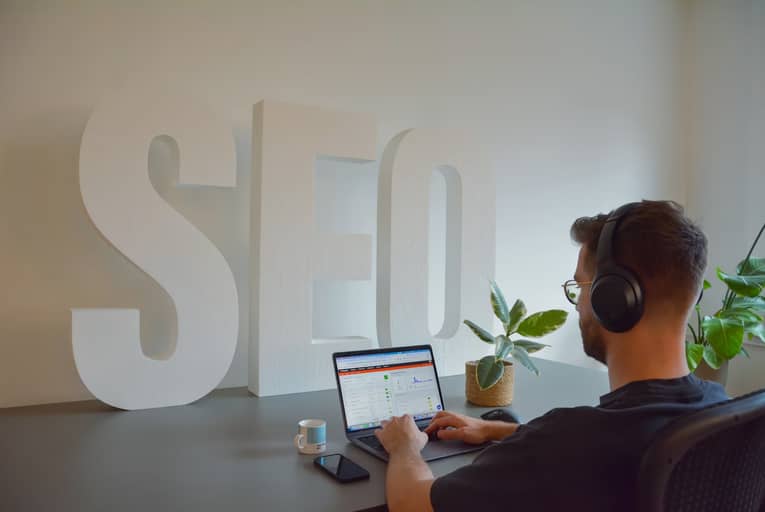














 In today’s fiercely competitive digital landscape, staying ahead of your competitors is crucial for small businesses. An SEO agency can provide the competitive edge your business needs to stand out and thrive. With a comprehensive understanding of your industry and competitors, an SEO agency can tailor strategies that capitalize on your strengths and exploit your competitors’ weaknesses. This strategic approach can lead to improved search rankings, increased online visibility, and a stronger brand presence.
 Google Autocomplete is a feature that suggests search queries based on what you’re typing into the search box. It’s a speedy technique to get ideas for related keywords that people are searching for. To use Google Autocomplete, simply start typing your primary keyword in the search bar and see what suggestions come up.
 LSI (Latent Semantic Indexing) keywords are words semantically related to the main keyword. These can help improve search engine rankings and attract more traffic to your website. LSI Graph is a tool that helps find these keywords. The magic is it can analyze the content of top-ranking pages for a given keyword, then return a list of LSI keywords based on those pages. This makes it easy to discover new keywords and topics related to your main keyword. In fact, it can provide insights into what topics and subtopics are most relevant for a given keyword.


 When making

 One of the biggest issues with social media marketing is declining organic reach. Organic reach refers to the number of people who see your posts without you paying for advertising. Social media algorithms are constantly changing, and as a result, organic reach on platforms like Facebook and Instagram has steadily declined over the years. This means that even if you have a large following, many people may not see your content. Even though you can
  While social media platforms offer various

 The market is constantly changing, and businesses must adapt to stay competitive. If you notice significant shifts in the market, such as changes in consumer behavior, new competitors, or technological advancements, it may be time to adjust your marketing strategy. This can help you stay ahead of your competitors and attract new customers.


 A/B testing is a great way to optimize your PPC campaigns and determine which versions of your ads are the most effective. This can be done by running multiple versions of your ads simultaneously and then analyzing the results to see which one performs better. It will help you identify which elements are working best so that you can adjust your campaigns accordingly. In conclusion, if you want to get the most out of your PPC campaigns, it’s essential to make sure that you are optimizing them for maximum performance.
 The first thing you should do is figure out what your goals are. What do you want to accomplish with your website? Do you want to increase traffic, improve your search engine ranking, or both? After identifying your needs, you can start looking for an SEO specialist who can help you reach those goals. If you’re unsure what your goals should be, consider talking to other businesses in your industry. Find out what has worked for them and see if you can replicate their success.
 In addition to SEO knowledge, you may also want to look for specialists with other skills that can benefit your website. For example, someone who knows web design or programming could help redesign your website or add new features. By following these tips, you can be sure that you’re hiring the best possible SEO specialist for your needs. With their help, you can improve your website and reach a wider audience.
 One of the biggest challenges that digital marketers face is keeping up with algorithm changes. It seems like every time you turn around, Google is changing its algorithm. This can make it challenging to keep your SEO strategy current and effective. Algorithm changes are just one example of how rapidly things can change in the digital marketing world. Keeping up with the changes is a challenge that all digital marketers face.

 Most of the time, when we visit a website to buy something, there will be a survey at the end of our visit. Why is that? It’s because businesses want to know what their customers think of their overall experience on the website. If you’re not providing a positive user experience, chances are people will leave your site without making a purchase. Make sure your website is easy to navigate, loads quickly, and contains relevant and accurate information.
 One of the best ways to build trust with potential customers is to include reviews and testimonials on your website. If you have happy customers, ask them to write a short review of their experience working with you. These can be posted on your website or on third-party review sites. Testimonials are even better because they provide a detailed account of someone’s experience with your company. Like reviews, they can be posted on your website or on third-party websites. If you have any press mentions, showcase them on your website as well. This will show potential customers that you’re a reputable business that others have trusted in the past.
 PPC can be a great complement to your organic SEO efforts. By bidding on key terms that you are targeting with your SEO campaigns, you can help to increase your visibility in the search results. This can ultimately lead to more traffic and conversions from your SEO and PPC campaigns. PPC is also a great way to get instant traffic to your website. If you are running a time-sensitive campaign or promotion, PPC can be a great way to drive relevant traffic to your website quickly.
 Finally, PPC advertising is very affordable for small businesses. With most PPC platforms, you only pay when someone clicks on your ad so that you can control your costs very effectively. In addition, discounts and other promotions are often available that can help further reduce your costs. in addition, many PPC platforms offer free trials, so you can test out the platform before committing to a long-term contract.
 PPC is short for pay-per-click, a model of internet marketing in which advertisers display ads on their websites and only pay when a user clicks on one of the ads. It means that advertisers are not charged for displaying the ad, but they are charged each time a user clicks on it. The advertiser determines the cost-per-click (CPC). They can set a maximum CPC bid. It is the highest amount they are willing to pay for a click on their ad. The quality index of the ad also influences the CPC of an ad. The quality index is Google’s rating of the quality and relevance of your keywords and landing page.
 So what are the drawbacks of PPC? The biggest one is that it can be expensive. In a highly competitive industry, CPCs can be very high. You could spend a lot of money on PPC without seeing any return on your investment. PPC can also be time-consuming. You need to constantly monitor your campaigns and make adjustments to ensure that your ads perform well. If you don’t have the time or resources to do this, then PPC is not the right choice.
 One of the most critical AdWord extensions for local businesses is local extensions. Local extensions allow you to include your business’s address, phone number, and other vital information in your ads. This is important because it enables potential customers to find your business more efficiently. For example, if someone is searching for a “pizza place near me”, and your ad includes your business’s address, they will be more likely to click on your ad.